

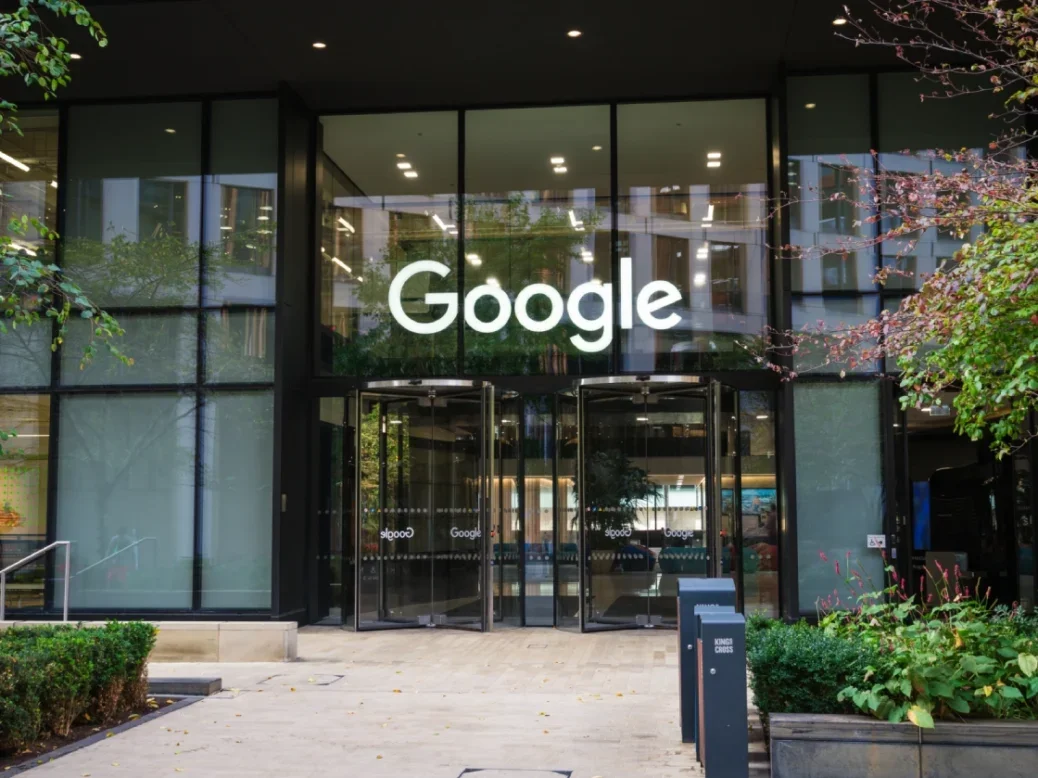
Full Fact has been “heartened” by the response of potential new funders and individuals donating money since Google cut off more than a third of the charity’s total annual funding.
In 2024, the latest figures available, Full Fact received more than £1m from Google either directly or via funds supported by the tech giant. Its total income was £2.9m.
This included £443,482 to support Full Fact’s AI fact-checking software (via Tides, a foundation supported by Google), £154,070 to support research into technology’s influence on fact checking, £111,725 in social impact funding, £92,478 for enhanced structured data of fact checks, and £46,752 for addressing election misinformation.
However Full Fact announced in October that all of this funding had been cut or simply not renewed, and issued an appeal for new funders and individuals giving via monthly direct debits in particular.
Mark Frankel, head of public affairs, told Press Gazette the end to the Google funding had come as a “big blow”.
Full Fact still speaks to Google, and uses its SynthID markers to help determine whether something has been manipulated or not, but Google is no longer “actively funding” its work.
“We hope that they will at some point decide that the work that we’re doing is sufficiently valuable for them to want to return to funding us in one way or another,” Frankel said. “We’re still hopeful that we can have that conversation with them again in the coming months and years.”
In the meantime, he said, the response to the appeal issued in October was “really heartening” and led to “conversations with people about new funding opportunities”.
Frankel said Full Fact has just secured a significant grant from a foundation but it still will not fill the entire funding gap left by Google.
Full Fact, which said it had more than 2,000 people giving monthly donations in October, has also seen a “steady uptick” in this type of funding over the past six months, Frankel said. This came both from people who were already giving who chose to increase the amount, as well as new individual donors.
Ojasvi Jalal, founder of news prediction start-up Cauldron, just raised more than £1,300 for Full Fact by running the Hackney Half Marathon. She told Press Gazette she wanted to do so because she kept hearing the same thing from people who’d stopped reading the news: “I don’t know what to trust”, and this was a problem both Full Fact and Cauldron want to fix.
Full Fact carried out a restructure at the end of 2025, cutting 11 posts or about a quarter of the workforce.
Frankel said: “We were very sorry to have to do it, it was clearly not something that we wanted to do, but it was clearly forced upon us by the financial constraints that we found ourselves in at the end of last year, subsequent to Google withdrawing the money that they did.”
He said they had made the decision to slim down but continue all of Full Fact’s activities across fact checking, technology and policy work rather than cutting any of its “core activities”.
“We still have the team structure that we had, but we just have had to reduce in volume terms some of the activity that we’re doing, so we overall are probably producing fewer fact checks than we were a year ago, we’re having to be more selective about the campaigning work and the policy work that we’re doing.”
A big policy focus at the moment is on the Representation of the People Bill going through the House of Commons, with Full Fact pushing for amendments around electoral misinformation and political deepfakes.
“The technology team is still very focused on the AI tools that we have and that we are proud of, and that we built, actually, with the support of Google, over many years. We thankfully own the IP to those tools, and we are actually able to continue developing those tools.”
For several years more than a third of Full Fact’s annual income has come from big tech companies.
Meta continues to fund Full Fact (to the tune of £353,475 in 2024) as one of the partners of its third-party fact checking programme, publishing responses to claims flagged by users on Facebook, Instagram and Threads.
Just over a year ago Meta ended the fact-checking programme in the US but has maintained it in other jurisdictions.
Frankel said being able to get in front of Meta users directly had been an “absolute godsend” in terms of reaching those who most need to see fact checks.
“To get to the hard-to-reach people with fact checks is always the biggest challenge, because the people that are most engaged will often be the ones that see your stuff more readily. It’s the people that perhaps are less well equipped to be able to distinguish fact from fiction, more easily led perhaps by the things that they see online or more easily persuaded to share something in a way that others might not, and they’re always the ones that we’re trying to get to…
“For us to be able, once we’ve done the fact check, to label it, so that when people then see it it persuades them to stop and think, is just an absolute godsend. Because we’re not in the business of taking this down, this is not about censorship, this is not about trying to prevent people who perhaps enjoy living in the online worlds that they are from being in those spaces.
“What we’re trying to do is introduce a level of friction into that debate… so that they don’t end up being pushed down rabbit holes or being led by conspiracies that could create real-life harms of one kind or another.
“And so we know that programmes like that, third-party policy fact checking, do help us to reach people that we wouldn’t otherwise reach. They help us to get to people who wouldn’t come to our website naturally, or perhaps wouldn’t see our content on social media in other ways.”
Today the overall environment around fact-checking is “a challenging one”, Frankel said.
“We are operating in times where fact checking has sadly been conflated with limiting people’s freedom of speech, where opinions have been confused with facts too readily, and there is a sense in some quarters by some politicians that fact checking is something that is limiting rather than enabling of people in terms of their ability to make informed choices.
“We don’t ascribe to that, obviously, we believe that it remains a really important part of the integrity of our information environment, and a lot of the things that are being built at the moment, particularly around language models, and with AI in mind, without the really valuable input of fact checkers, would be less responsible, less ethical, less trustworthy.
“We’re not against the idea of crowdsourcing for content moderation in the way that X, Meta, Tiktok, and others have all proposed, and are building systems to do so, but we’ve always said that having a fully automated, fully AI-driven approach to these things risks putting profit before responsibility, and it risks people being actively misled on a daily basis.”
The environment around philanthropic funding is “hard” but has improved in the past six to nine months, Frankel said.
He described a “real nervousness” from philanthropic organisations after the start of the second Trump administration in the US who wanted to “wait and see and observe the landscape”.
Now many have got to the point where they have decided, Frankel explained, to be more proactive to help ensure “there are organisations out there that are still able to do the valuable work that they need to do to help people to navigate this incredibly challenging environment”.
“From where we sit, we’ve started to see more conversations, more people taking an interest in the work that we and others in this sector are doing, because I think they recognise that it’s a kind of do or die, that we are in this really difficult situation where if we go much further some of these organisations simply will not survive for much longer, and that environment will become almost too challenging for people to be able to navigate.”
Similarly, he described governments and regulators waking up “to this being a pressing issue” as matching “words with deeds”, for example via the international response to Grok’s nudification images on X, Ofcom fining 4Chan and new legislation being developed.
“None of this is far enough, but it gives us some heart that we know that there are people out there who are wanting to go further and faster, and that it’s a battle that ultimately we can stay ahead of.”
Email pged@pressgazette.co.uk to point out mistakes, provide story tips or send in a letter for publication on our "Letters Page" blog
